EXCLUSIVE DIGITAL ACCESS
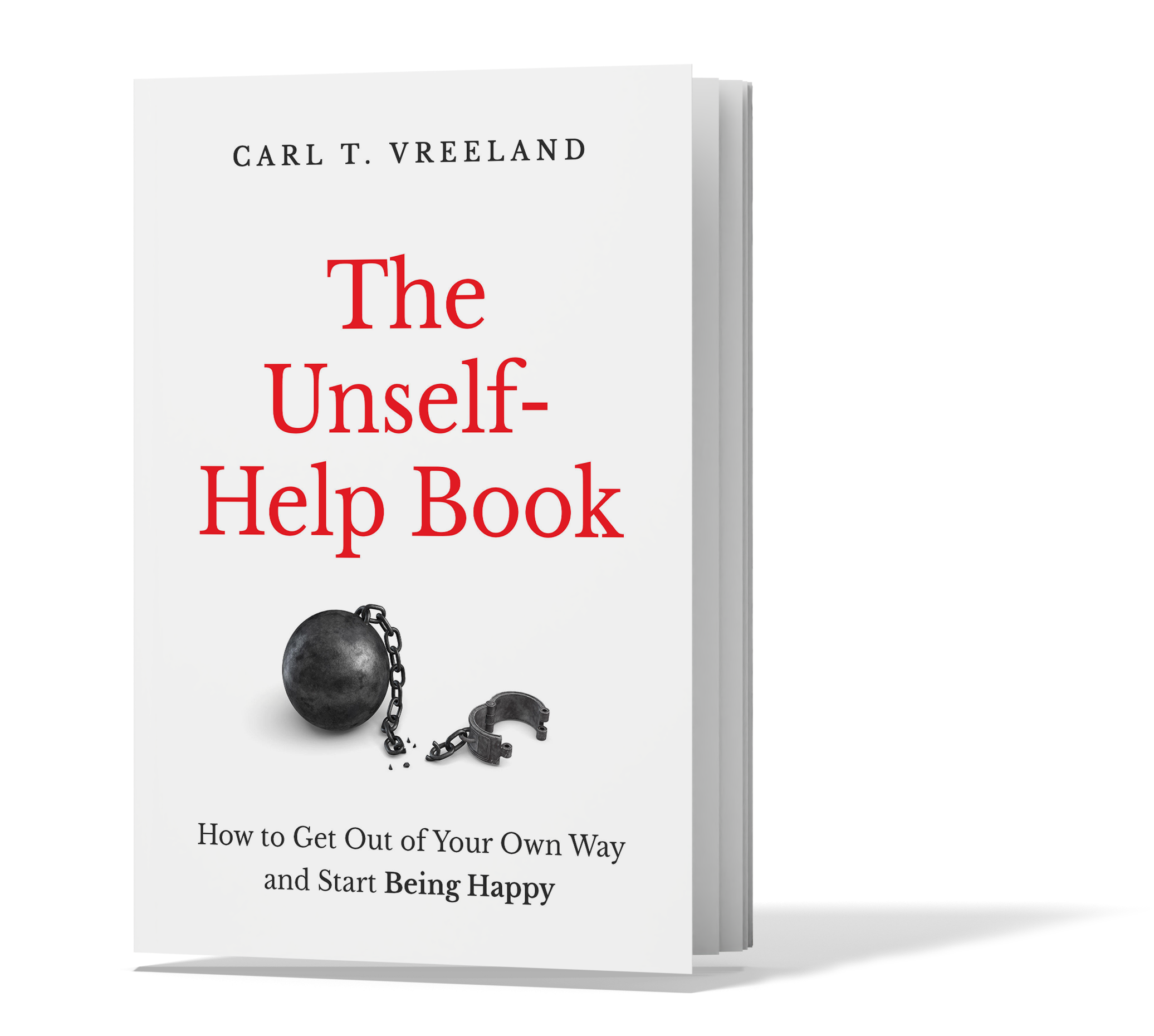
The Unself-Help Book
How to Get Out of Your Own Way and Start Being Happy
This book is a comprehensive blend of Western and Eastern thought, science and spirituality, and the practical and metaphysical. It dives into the neurosciences, psychology, Yoga, Buddhism, Taoism, meditation, metaphysics, and the depths of what it is to be human. It explores the reasons why many of us are unhappy, unearthing the seemingly innocuous habits of thought and behavior that can cause stress, fear, and anxiety.
eBook $8.99
(Hardcover and Paperback editions following shortly)

Praise for The Unself-Help Book
EXCLUSIVE ADVANCE ACCESS
Secure the digital edition and receive the eBook on the day of the release: February 15th.

Why I Wrote this Book
In part, this book is my story, an account of how I overcame adversity, outlining my struggle and the steps I took to find a happier, more peaceful life. For over thirty years, I lived with obsessive-compulsive disorder (OCD), chronic depression, anxiety disorder, and the relentless cycle of addiction. I turned into an angry, resentful, unforgiving, negative, cynical person who was filled with fear. I didn’t know how to handle life’s challenges.
Likewise, I catastrophized about every unwanted event and ruminated on all my past mistakes, bad choices, and failures. And although self-help methods and talk therapy helped me, they only did to a point. It wasn’t until I came upon the spiritual program of Alcoholics Anonymous, Yoga, and Buddhist philosophy that my life took a turn and transformed.
I wrote The Unself-Help Book because I am a living testament to the fact that our greatest hardships can lead to our most extraordinary transformations. Today, in these pages, I share my story not just as a man who found his way out of the darkness, but as a researcher and a teacher. My mission is to reveal to you a grounded path that will guide you to create great change—one that begins the moment you decide to get out of your own way.

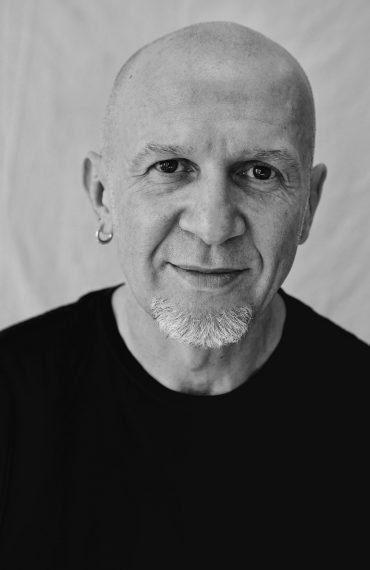
CARL T. VREELAND
Author / The Unself-Help Book

We can change our lives. The only thing stopping us is ourselves.
CHANGE
For the reader who has exhausted the promises of traditional self-help—the affirmations, the intention-setting, and the daily mantras—and is now seeking a more grounded, practical curriculum for change.

RECOVERY
For those struggling with alcoholism, drug addiction, gambling issues, porn addiction, and the like, this book illustrates a method, suggestive path, and new model for living that will help bring about sobriety and purity of heart.

PEACE
For the individual struggling with the innocuous habits of thought that fuel anxiety, anger, and depression. This book provides a sanctuary for those looking to realign their inner world with a sane and joyful reality.
EXCLUSIVE ADVANCE ACCESS
Secure the digital edition and receive the eBook on the day of the release: February 15th.

A Preview of what's
Inside the Book
CHAPTER THREE: SELF-HELP VS. UNSELF-HELP
Excerpt from Chapter Three: Self-Help vs. Unself-Help. Self-help is the action or process of bettering oneself or overcoming one’s problems without the aid of others, especially in the form of trying to cope with one’s personal or emotional problems without professional help. Although many people appear to benefit from self-help methods, my view is that their efficacy is limited.
Why does self-help seem to work for some people? Likely, it’s because they fall into the family of the fortunate few who aren’t broken. Meaning, they aren’t stricken with debilitating anxiety, alcoholism, or depression. They have the energy to get out of bed bright and early, go to the gym, shower and suit up for work, raise children, continue their education, and entertain on the weekends. They create secure family ties, maintain their religious and family traditions, and cultivate close circles of friends and colleagues. They have active, meaningful social lives, and they establish a strong identity and sense of place in the world. They have the appearance of being able to choose the positive over the negative, happiness over sadness, and forgiveness over holding grudges. Everything works out well for them, or at least well enough. They deal with life’s difficulties soundly and have stable support networks to lean on during the more troubling times, such as a divorce, loss, or death. They function in a healthy manner, and self-help provides them with a toolbox that improves their lives. There is seldom a reason to seek professional help, never mind spiritual help.
If only it were that simple for all of us. Unfortunately, it is not. Many of us who suffer from anxiety, depression, anger, or addiction are unable to choose the positive over the negative, lack the energy to help others, and, contrary to what many self-help gurus preach, cannot “choose to be happy.” These choices are unavailable to us. And all the imparted wisdom from aspiring and well-intentioned people only leaves us uninspired and un-lifted. Motivational quotes like “Believe in yourself,” “Hope is the one thing stronger than fear,” and “You are stronger than you think” only make us feel worse, less-than, and lacking. This was certainly the case with me. “What’s wrong with me? Why can’t I just be happy?” I felt weak-willed.
Trauma and perhaps a tender predisposition pulled me down into an early depression. I never knew what it was like to not be depressed. I never fell into a depression to know I was in one. My life didn’t dramatically change one day, as though I was once productive, social, optimistic, hopeful, and happy and then suddenly found myself to be quite the contrary. I was never optimistic, hopeful, or happy to begin with, so there was no contrast. I had nothing to compare my depression to because I didn’t know any different. Depression was all I knew. I always felt alienated, alone, and deeply uneasy, as far back as I can remember. I was like a camera eye viewing the world from a distance, separate from the world and other people, on the outside looking in, uncomfortable in my skin. My life was always cloudy and skewed. And over the years it grew darker.
CHAPTER EIGHT: REWIRING THE MIND
Excerpt from Chapter Eight: Rewiring the Mind. Our mind thinks; that’s what it does. We cannot stop thoughts from arising. It’s our attachment to them that causes a lot of our suffering. It’s our inability to let them go that deflects us from focusing, relaxing, and sleeping at night. It’s our overthinking and overanalyzing that is the cause of our anxieties and unease. From time to time, I half-jokingly tell my students, “If you want to be happy, stop thinking.” Of course, you can’t stop thinking, but you don’t have to be enslaved by every thought that appears. I learned that unwanted, distracting, and obsessive thoughts are not the problem. It’s actually the way we respond to the thoughts, and our relationship to them, that cause suffering. The practice of meditation can transform that relationship. Imagine being able to literally take this suggestion: Don’t give it another thought. Meditation gives us that gift freely.
If the mention of meditation makes you roll your eyes, I understand. I was skeptical too. In fact, I had no desire to try it, no interest in it, no time for it, and I couldn’t see how it could possibly help me. How could sitting still in a seated position doing nothing have any benefits? It made no practical sense. All the same, the universe had other plans for me. As part of my Yoga teaching training program, I had to study and practice Buddhist meditation.
The Buddha came to know that the mind is ill at ease being in the present moment. This is one reason why meditation is burdensome in the beginning. The mind is easily distracted and loves to wander, fantasize, relive the past, plan, plot, and worry. Buddhists call this “monkey mind.” As a monkey jumps from one branch to another, so does the mind jump from one thought to another. Meditation trains our minds to be more steady, present, focused, and aware.
CHAPTER TWELVE: WORKING WITH AGGRESSION
Excerpt from Chapter Twelve: Working with Aggression Anger is a secondary emotion. Humiliation, frustration, disappointment, rejection, hurt, guilt, shame, regret, and jealousy (to name but a few) are the primary emotions that often lead to anger and aggression. I propose that there is also a sub-primary emotion underlying all emotions and responses, and that emotion is fear (see Chapter 15). For example, when one is rejected by their lover, fear sets in: “I’m not lovable. I’m destined to be alone.” Of course, feelings of hurt, disappointment, and shame arise, and these feelings often lead to anger and bitterness. Yet fear, the underlying emotion, often goes unnoticed. Same goes for a threat, wherein we feel unsafe and vulnerable. Our natural response is anger, but it is fear that activates the fight-or-flight response, not anger. Anger is the emotional response and the energy we generate to help us fight or flee.
I didn’t understand that anger is an emotion and aggression is an action. I didn’t know there was a difference between them: meaning, anger and aggression. I got angry and, in turn, aggressively responded to whoever annoyed me. I thought there was only one way to express anger—furiously and forcefully. I didn’t know that anger could be expressed in appropriate and productive ways. Moreover, I believed that my occasional loss of self-control and slamming of the door was the fault of my offender. I took no responsibility for what I saw as a justifiable action.
Anger is unavoidable. We cannot stop it from coming to the surface, nor should we. However, there are therapeutic ways to experience our anger, process it, and express it. Much to my surprise, I discovered that anger can be communicated constructively without aggression— although aggression isn’t the only way we mishandle anger. There are those who repress their anger; they unconsciously hold down their anger, not letting themselves feel it. They become overwhelmed in difficult or hostile situations. They might shed tears, freeze, or shut down. They frequently think that they are fine, yet in reality they are numbed out and disembodied. They are detached from their emotions; they might display passive-aggressive behavior toward others but not know why. Others suppress their anger; they feel it and know it’s there but consciously choose to stuff it down. Of course, we can’t bury our anger and expect it not to localize somewhere. Whether it be toward our friends, family, children, pets, or in the form of a psychosomatic physical or mental illness, repressed or suppressed anger will always find a
destination to reside in.
In a civilized society, fighting and reacting aggressively are harmful, provocative, unwise, and unhealthy. Conversely, fleeing is inappropriate, uncivil, and passive-aggressive. That said, anger is not the problem, per se. The problem is aggression, repression, and the suppression of anger. Getting angry is natural. Problems occur when we lash out, block our anger, or stuff it down. Developing an awareness of our strong habitual patterns of behavior and triggers is an important step toward understanding ourselves, breaking these habits, and gaining freedom from suffering. And of course, we must get more in touch with our emotions. If someone rejects us, we must get into the practice of residing in the fear, hurt, and arising anger; refraining from building a storyline; and resisting the urge to escape those uncomfortable, vulnerable emotions.
"It’s time to step out of your own way."
Self-help methods often keep us trapped in a cycle of self-analysis. The Unself-Help Book offers a profound alternative: a suggestive path of action that begins when overthinking and self-analysis ends. By embracing the unself work, you are not just buying a book—you are securing a compass for the most important journey of your life.
Subscribe to the Newsletter